I
En el margen izquierdo —la franja que el espejo NO duplica— se extiende una figura yacente: un cuerpo alargado en reposo, con una banda clara cruzando el centro que muchos leen como dos manos juntas sobre el pecho o el corazón. Es la postura funeraria por excelencia: el difunto compuesto, dispuesto en su tumba. Muchos ven aquí, específicamente, a Cristo amortajado — el cuerpo de la Sábana Santa, manos cruzadas — mientras que su extremo superior, con una cabeza estrecha y alargada, se lee también como un rostro 'gris' de ojos grandes. Y aquí hay un matiz crucial: a diferencia de F1–F5, esta figura NO nace del doblez simétrico del render — vive sobre terreno real (aunque de baja resolución). Es, por tanto, la única que el artefacto de espejo no explica por sí solo… lo que no la libra de la pareidolia, pero sí la vuelve la más intrigante de todas.
On the left margin — the strip the mirror does NOT duplicate — a recumbent figure stretches out: an elongated body at rest, with a pale band crossing the center that many read as two hands folded over the chest or heart. It is the funerary pose par excellence: the composed dead, laid out in the tomb. Many see here, specifically, Christ shrouded — the body of the Shroud of Turin, hands crossed — while its upper end, with a narrow elongated head, also reads as a big-eyed 'grey' face. And here is the crucial nuance: unlike F1–F5, this figure is NOT born of the render's symmetric fold — it sits on real (if low-res) terrain. It is therefore the only one the mirror artifact alone does not explain… which does not free it from pareidolia, but does make it the most intriguing of all.
II
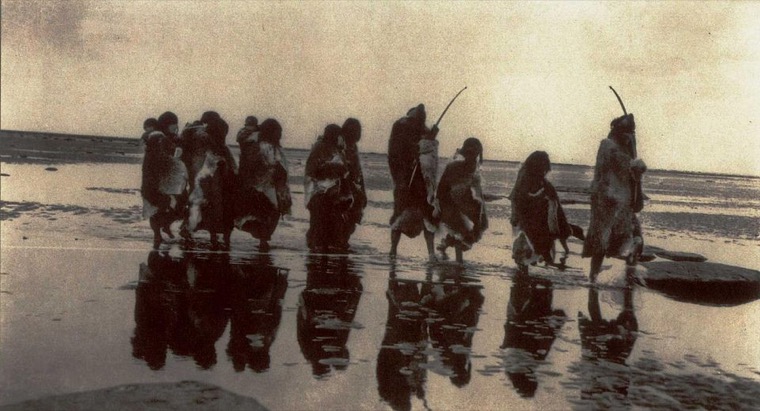
Selk'nam — El difunto envuelto. Los Selk'nam disponían a sus muertos en la tierra de su territorio; en el Hain, Xalpen arrastraba bajo tierra a los iniciados. Un cuerpo tendido en el suelo del fin del mundo es literal aquí.
Selk'nam — The wrapped dead. The Selk'nam laid their dead in the earth of this very land; in the Hain, Xalpen dragged initiates underground. A body laid on the soil at the end of the world is literal here.
●●●
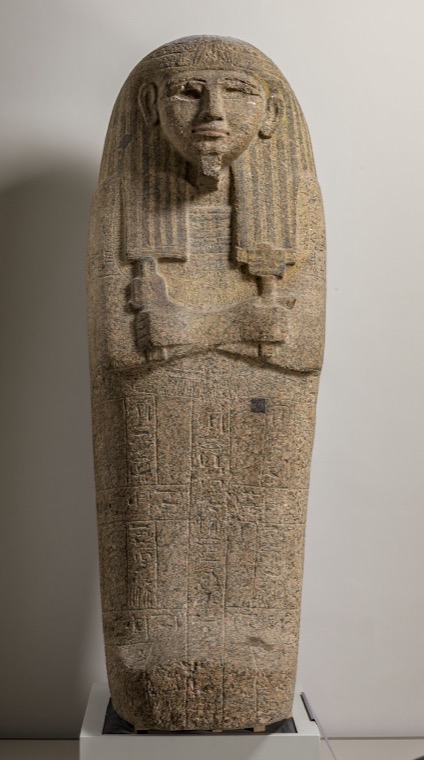
Egipto — La momia de Osiris. La imagen egipcia de la muerte es el cuerpo amortajado con los brazos cruzados sobre el pecho (la pose de Osiris, sosteniendo cayado y mayal). La 'banda sobre el pecho' de esta figura es esa misma cruz de brazos. Coincidencia máxima.
Egypt — The mummy of Osiris. Egypt's image of death is the shrouded body with arms crossed over the chest (the Osiris pose, holding crook and flail). This figure's 'band across the chest' is that same crossed-arms. A maximal match.
●●●
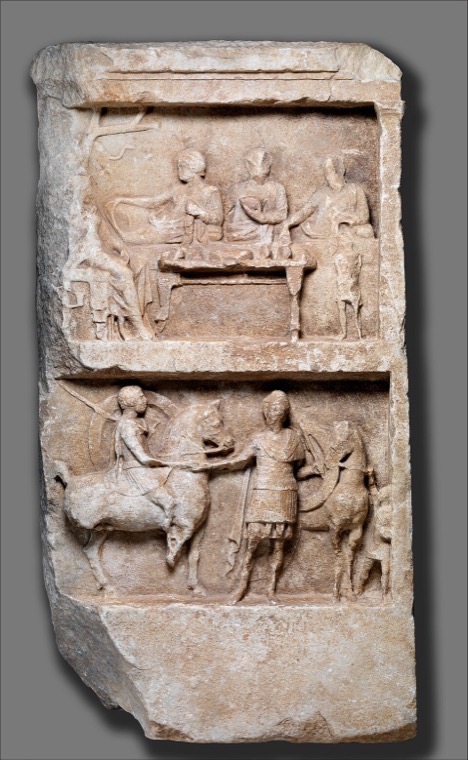
Grecia — La próthesis. En la próthesis griega el difunto se exponía tendido y compuesto sobre el lecho fúnebre, manos dispuestas — la escena que pintan las cerámicas funerarias.
Greece — The prothesis. In the Greek prothesis the dead lay composed and outstretched on the funeral bier, hands arranged — the scene painted on funerary vases.
●●●
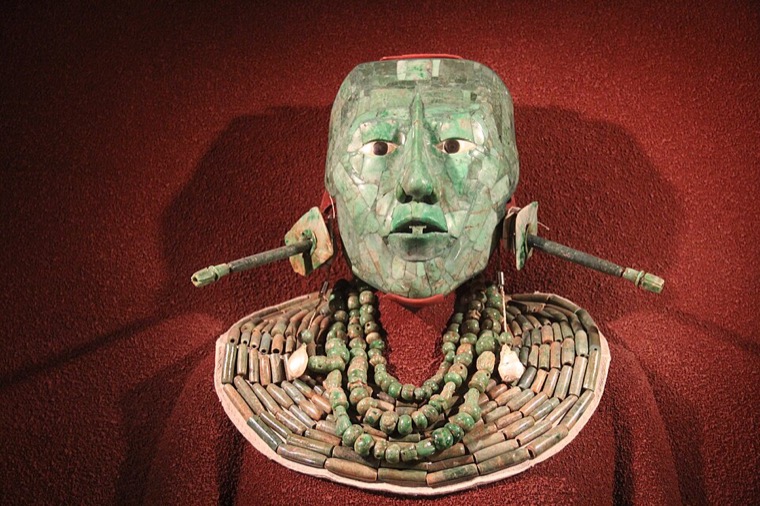
Maya — Pakal yacente. El rey Pakal fue sepultado yacente en su sarcófago de Palenque, cayendo hacia el inframundo por el Árbol del Mundo. El gobernante tendido es el umbral entre vida y muerte.
Maya — Pakal recumbent. King Pakal was buried recumbent in his Palenque sarcophagus, falling into the underworld down the World Tree. The reclining ruler is the threshold between life and death.
●●●
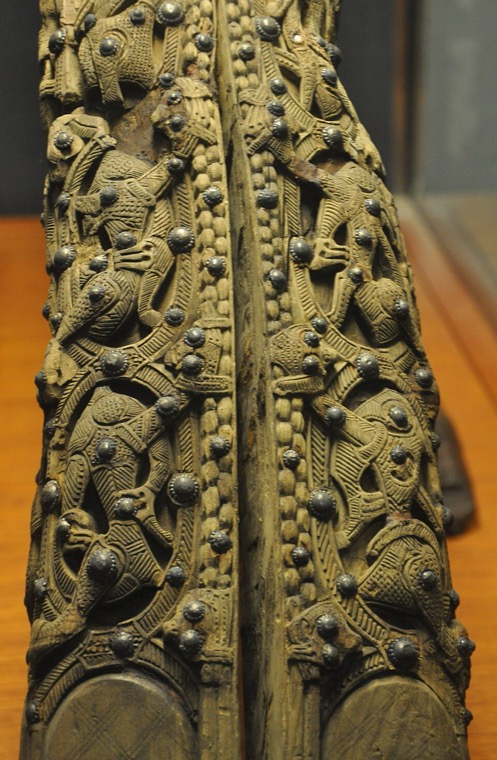
Nórdico — El entierro en barco. El guerrero nórdico era dispuesto tendido en su barco-tumba con sus bienes. La figura alargada en reposo evoca ese cuerpo embarcado hacia el más allá.
Norse — The ship burial. The Norse warrior was laid out in his ship-grave with his goods. The elongated resting figure evokes that body sailing into the beyond.
●●●
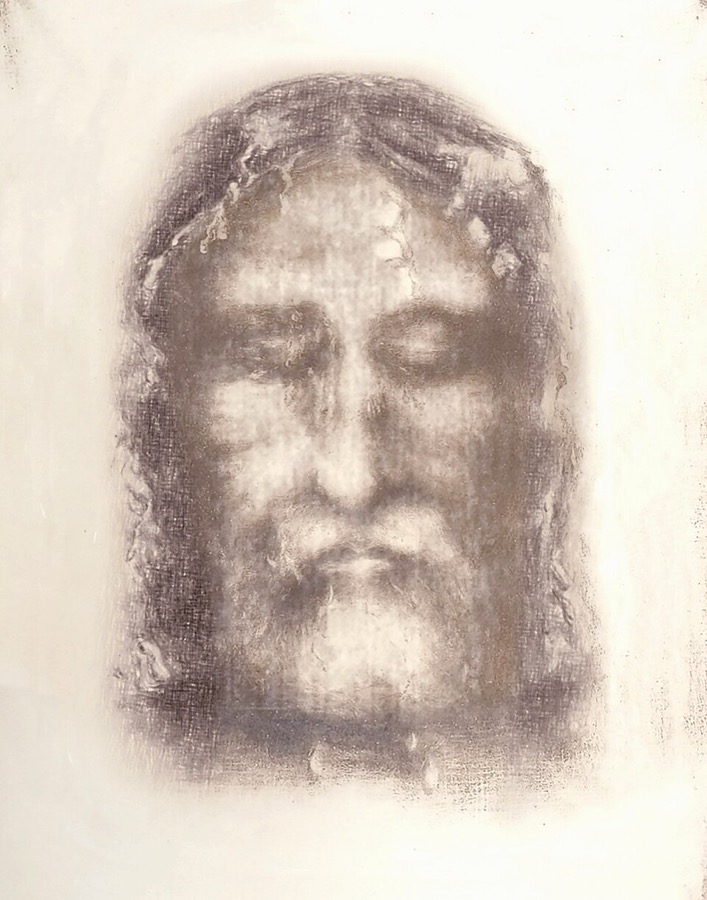
Cristiana — Cristo en el sepulcro / la Sábana Santa. La imagen cristiana central de la muerte es Cristo yacente en el sepulcro, y sobre todo la Sábana Santa de Turín: el cuerpo frontal de un hombre amortajado, con las manos cruzadas sobre el pubis/pecho, impreso en un lienzo. Es, quizá, la sincronía más cargada: un cuerpo crístico amortajado apareciendo en la nieve del fin del mundo.
Christian — Christ entombed / the Shroud of Turin. Christianity's central image of death is Christ recumbent in the tomb, and above all the Shroud of Turin: the frontal body of a shrouded man, hands crossed over the chest, imprinted on cloth. It is perhaps the most loaded synchronicity: a Christic shrouded body appearing in the snow at the end of the world.
●●●
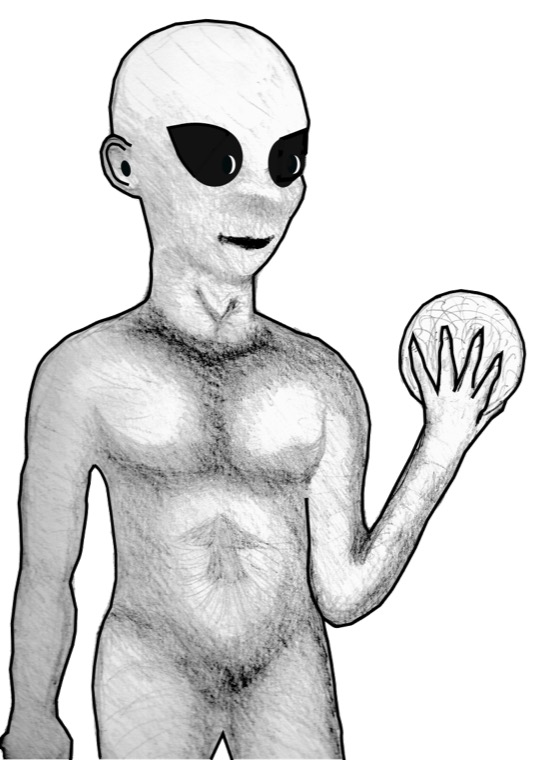
El Visitante — El cuerpo en estasis. La lectura del visitante (paleocontacto) ve un 'ser en cápsula de estasis', manos cruzadas, dormido. Honestidad: la pose de reposo con manos al pecho es el gesto humano universal de la muerte serena — por eso lo proyectamos hasta en la nieve.
The Visitor — The body in stasis. The visitor (ancient-astronaut) reading sees a 'being in a stasis pod', hands crossed, asleep. Honesty: the resting pose with hands at the chest is humanity's universal gesture for a serene death — which is why we project it even onto snow.
●●●
III
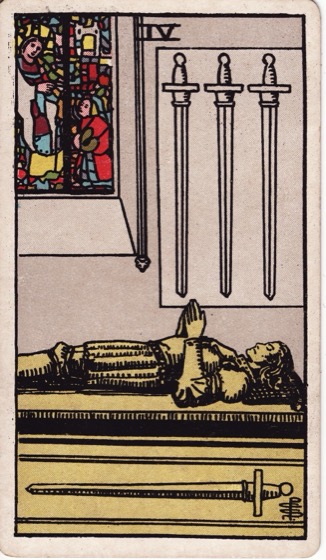
Cuatro de Espadas
Four of Swords
Su naipe clásico muestra, literalmente, una efigie yacente sobre una tumba con las manos juntas en reposo. Es esta figura, dibujada hace siglos.
Its classic card shows, literally, a recumbent effigy on a tomb with hands folded in repose. It is this figure, drawn centuries ago.
♑ Capricornio · Saturno
♑ Capricorn · Saturn
El Ancestro · el reposo
The Ancestor · repose
✦
La sincronía más fuerte de todas: el Cuatro de Espadas YA es una tumba con un cuerpo yacente y manos en reposo.
The strongest synchronicity of all: the Four of Swords ALREADY is a tomb with a recumbent body and resting hands.
IV
Aquí la honestidad se vuelve más interesante: F6 vive sobre terreno real, no sobre el doblez. Eso no la libra de la pareidolia —la pose de reposo con manos al pecho es nuestro gesto universal de la muerte serena— pero sí la convierte en la más intrigante, y en la prueba que vale la pena contrastar en una fuente sin drapeado 3D.
Here the honesty gets more interesting: F6 sits on real terrain, not on the fold. That doesn't free it from pareidolia — the resting pose with hands on the chest is our universal gesture for a serene death — but it does make it the most intriguing, and the one worth cross-checking in a source with no 3D drape.
Y aun así, sigues mirando.
And still, you keep looking.