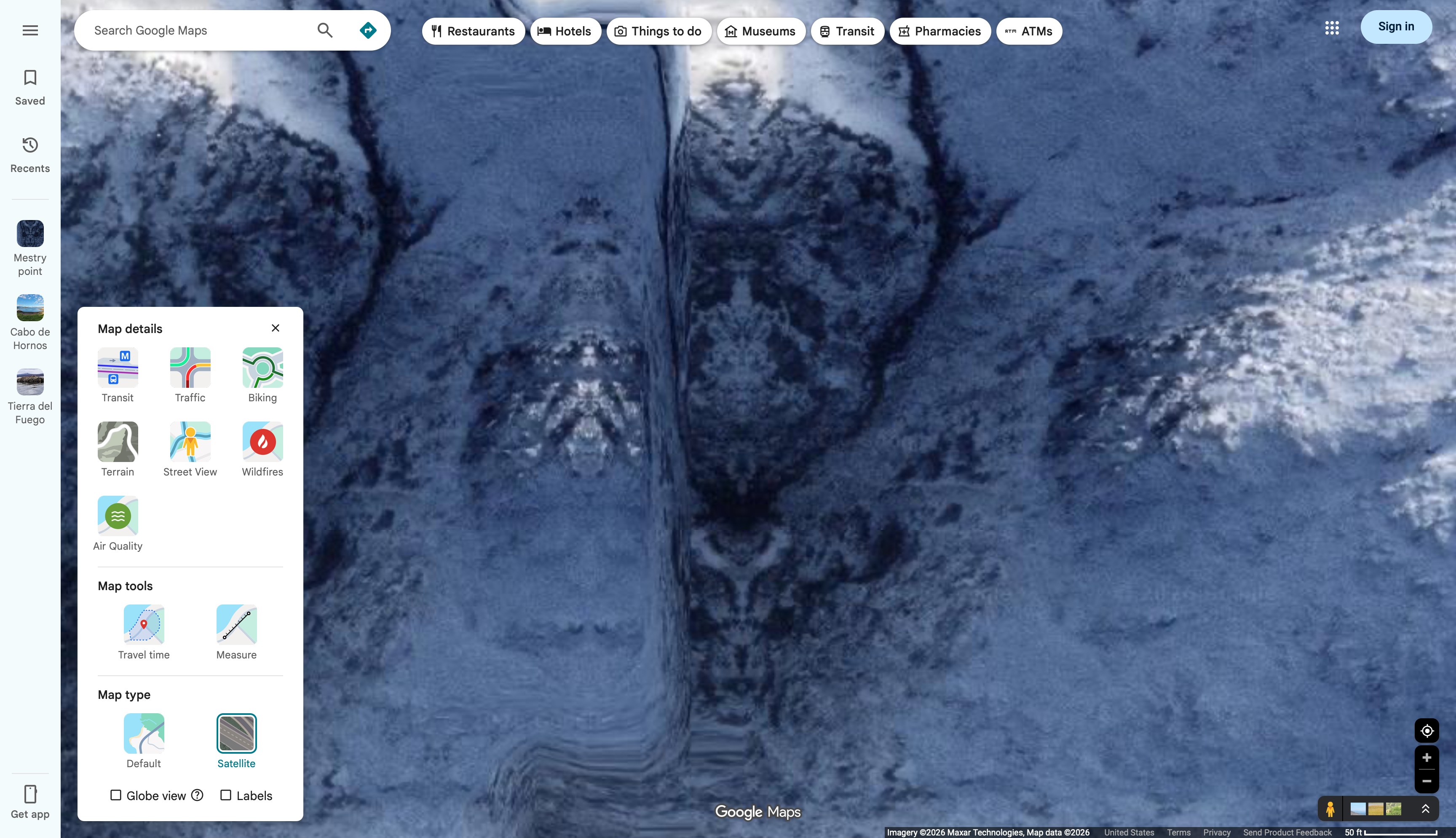
Pudo terminar ahí — en una captura guardada y una certeza privada. En vez de eso, empezó esta investigación: abierta, escéptica, sin afirmar nada. Porque la pregunta honesta no es «¿qué hay ahí?» sino «¿por qué tú —y tantos otros— ven exactamente lo mismo?» Lo que sigue es el expediente completo. La última palabra es tuya.It could have ended there — a saved screenshot and a private certainty. Instead, this investigation began: open, skeptical, claiming nothing. Because the honest question is not “what is out there?” but “why do you — and so many others — see exactly the same thing?” What follows is the full file. The last word is yours.
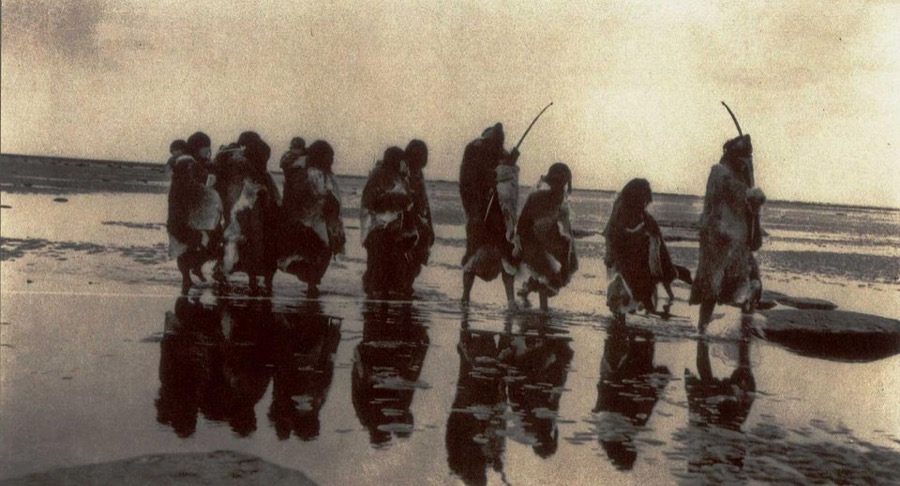
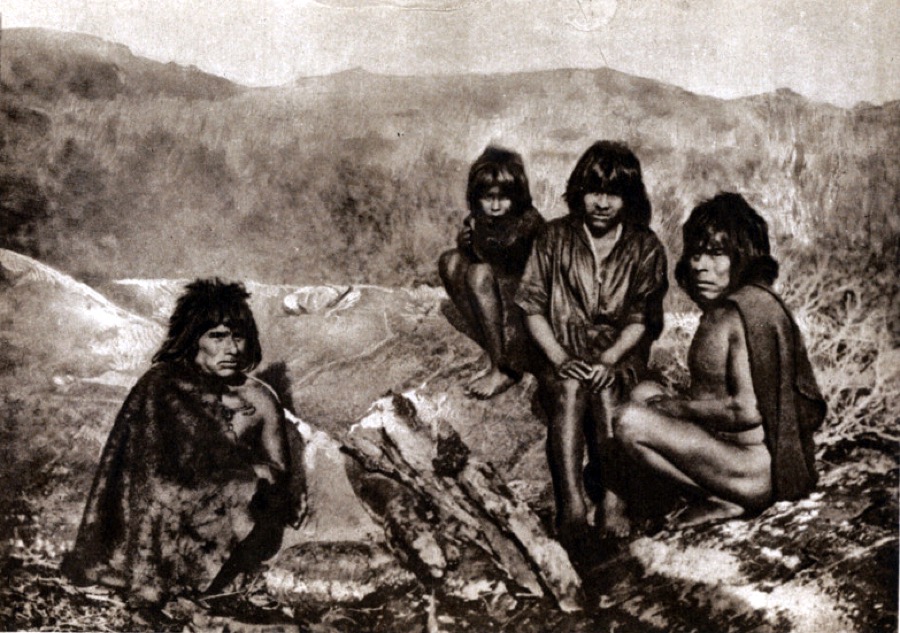
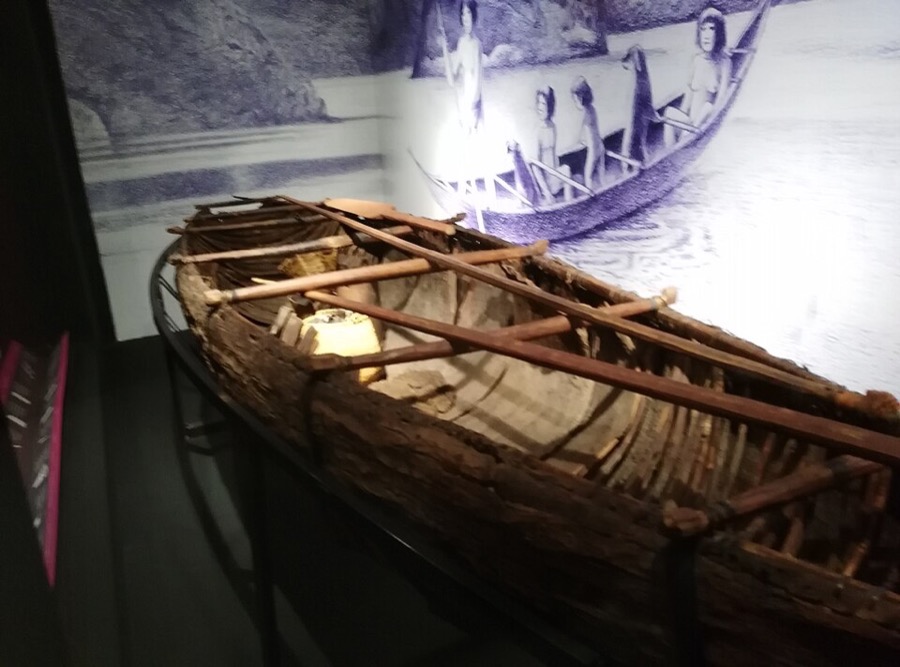
En esta esquina del planeta convivieron tres pueblos. Los Selk'nam (u Ona), cazadores del guanaco en la isla grande de Tierra del Fuego. Los Yámana (o Yaghan), nómades del mar que remaban en canoas de corteza por el canal Beagle hasta el mismo Cabo de Hornos — el pueblo que vivía más al sur que ningún otro ser humano. Y los Kawésqar, navegantes de los canales occidentales de la Patagonia. Mantenían el fuego encendido incluso dentro de sus canoas; por esas hogueras vistas desde el mar, Magallanes bautizó la región Tierra del Fuego.Three peoples shared this corner of the planet. The Selk'nam (or Ona), guanaco hunters on the great island of Tierra del Fuego. The Yámana (or Yaghan), sea nomads who paddled bark canoes through the Beagle Channel all the way to Cape Horn itself — the people who lived farther south than any other human. And the Kawésqar, navigators of western Patagonia's channels. They kept fire burning even inside their canoes; for those fires seen from the sea, Magellan named the region Tierra del Fuego, the Land of Fire.
Su ceremonia central, el Hain (entre los Yámana, el Chiexaus), era un largo rito de iniciación. Los hombres se cubrían de pintura roja, blanca y negra y se ponían máscaras cónicas para encarnar a los espíritus — Shoort, Halaháches, la temible Xalpen — y sostener así el orden del mundo. Cuando ves una 'máscara' o un 'ser de brazos abiertos' en estas figuras, estás viendo, sin saberlo, la forma exacta que ellos tallaban para tocar lo sagrado.Their central ceremony, the Hain (among the Yámana, the Chiexaus), was a long initiation rite. Men covered themselves in red, white and black paint and donned conical masks to embody the spirits — Shoort, Halaháches, the dreaded Xalpen — and so uphold the order of the world. When you see a 'mask' or an 'open-armed being' in these figures, you are seeing, without knowing it, the exact form they carved to touch the sacred.
Y luego, casi todo se perdió. Entre 1880 y comienzos del siglo XX, la llegada de las estancias ovejeras desató una cacería: se llegó a pagar por cada Selk'nam muerto. La enfermedad y las misiones hicieron el resto. De varios miles quedó un puñado. La última hablante nativa del yagán, Cristina Calderón, murió en 2022. No están 'extintos' — hay descendientes que reivindican su lengua y su memoria — pero un mundo entero fue arrancado de esta tierra.And then, almost everything was lost. Between 1880 and the early 20th century, the arrival of the sheep ranches unleashed a hunt: a bounty was paid for every Selk'nam killed. Disease and the missions did the rest. Of several thousand, a handful remained. The last native Yaghan speaker, Cristina Calderón, died in 2022. They are not 'extinct' — descendants reclaim their language and memory — but an entire world was torn from this land.
Su universo estaba poblado de howenh: los antepasados del tiempo mítico que, al final de su era, se transformaron en animales, vientos, montañas y estrellas. El propio Hain nacía de un mito: en el principio gobernaban las mujeres, que se ponían las máscaras de los espíritus; cuando los hombres descubrieron el engaño, tomaron las máscaras para sí. Leer rostros y seres en la naturaleza no era para ellos superstición — era recordar que el mundo entero fue, alguna vez, gente.Their universe was peopled with howenh: the ancestors of mythic time who, at the end of their era, turned into animals, winds, mountains and stars. The Hain itself was born of a myth: in the beginning women ruled, wearing the masks of the spirits; when the men discovered the deception, they seized the masks for themselves. To read faces and beings in nature was not superstition for them — it was to remember that the whole world had once been people.
Por eso estas figuras resuenan tan fuerte con su mundo — la máscara frontal (F5), el ser de brazos abiertos (F2), el rostro que vigila (F4), el cráneo alargado (F3). Pero la honestidad manda: no resuenan porque ellos tallaran un monumento en este cerro, sino porque la máscara, el rostro y los brazos abiertos son gestos humanos universales. Vemos lo que toda la humanidad ha visto siempre.That is why these figures resonate so strongly with their world — the frontal mask (F5), the open-armed being (F2), the watching face (F4), the elongated skull (F3). But honesty rules: they resonate not because anyone carved a monument on this hill, but because the mask, the face and the open arms are universal human gestures. We see what all of humanity has always seen.
: Martin Gusinde, Die Feuerland-Indianer / Los indios de Tierra del Fuego (Hain ceremony, 1918–1924) · Anne Chapman, Drama and Power in a Hunting Society: the Selk'nam · Gallardo et al., (2022).
— René Metayer